Introducing PiWall: One Wall for Yoga and Pilates
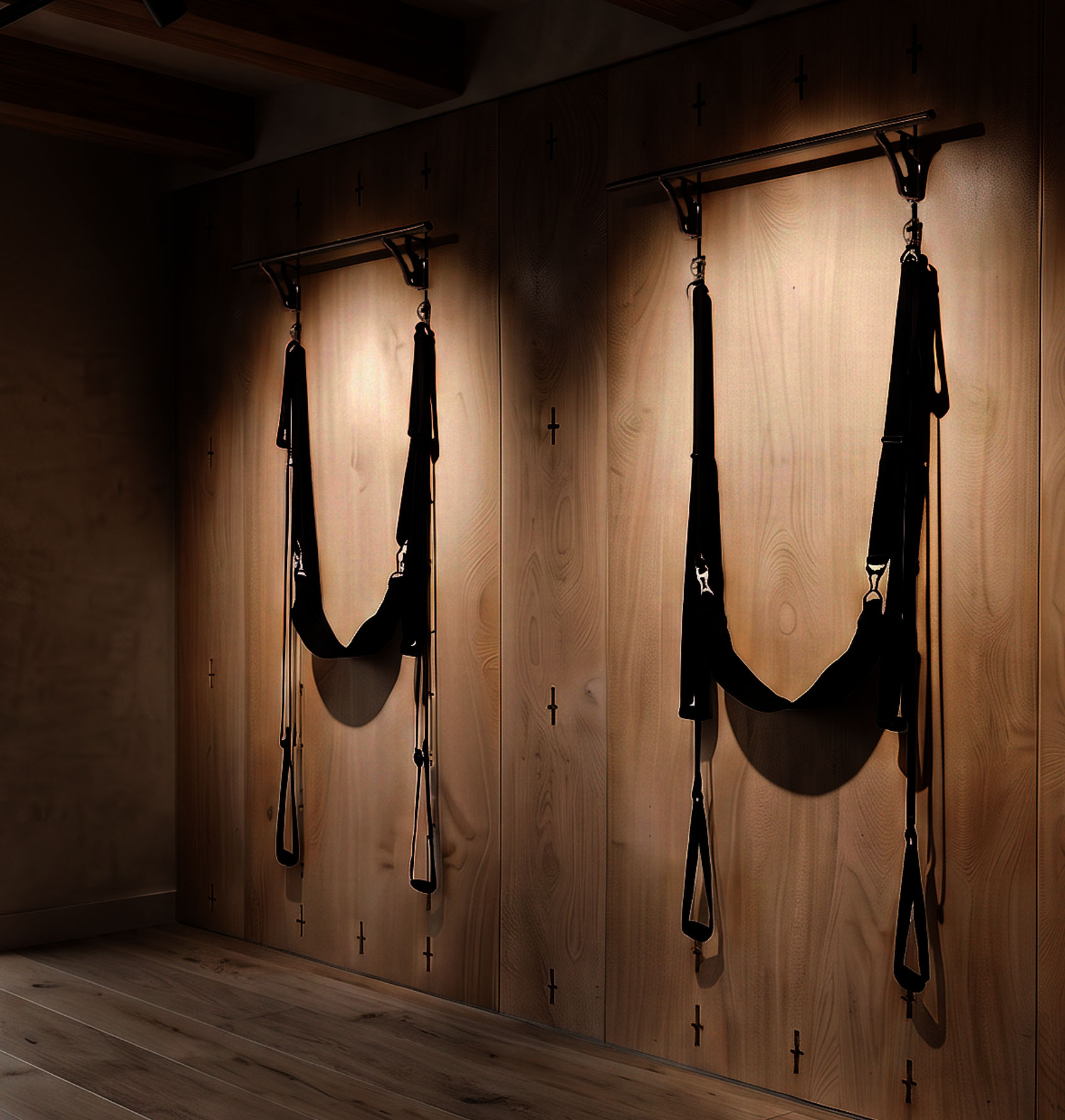
For most of their shared history, yoga and Pilates have each claimed a piece of the wall — but never the same piece. Yoga has its ropes. Pilates has its towers. PiWall is our answer to a simpler question: what if one wall could hold both?
Two traditions, one surface
Training against a wall isn't new to either discipline. Wall-assisted yoga traces back to the rope-and-wall method B.K.S. Iyengar began developing in the late 1960s, using the wall's resistance to help practitioners find safer alignment in backbends, inversions, and long-held poses. Pilates studios, facing the same space constraints, took a different route — scaling the Cadillac's spring and trapeze mechanics down into compact, wall-mounted towers built for smaller studios and home practice.
Both solved the same underlying problem from opposite directions: how to get more discipline out of less floor space. Neither solved the fact that a practitioner serious about both still needed two separate systems, on two separate walls, speaking two different mechanical languages. PiWall starts from a different premise — that the wall doesn't need to choose a discipline, only a design precise enough to serve both equally well.
Not the trend that shares its name
It's worth being direct about what PiWall isn't. "Wall Pilates" has also become the name for something else online over the past couple of years: bodyweight-only routines that use a wall purely as a stationary prop, no equipment involved, usually organized around 28-day social media challenges. It's a low-barrier way for people to start moving, but it's a different category of thing entirely.
PiWall is permanently mounted spring and strap resistance, engineered to the same tolerances as our Reformer and Tower Reformer. In spirit, it has more in common with a studio's wall tower and a yoga room's rope wall than with a viral home routine — we've simply brought the two together into a single system, rather than asking a practitioner to install, and choose between, both.
What's actually on the wall
Underneath the minimal surface is a system built the way we build everything else: as mechanics first, aesthetics second. Multiple attachment positions accept handles, straps, and a range of accessory configurations, and a quick plug-in, secure-lock connection means moving between exercises takes seconds rather than tools.
The surface itself stays flat and smooth, with no protruding screw heads to catch a hand, a hip, or a heel mid-movement. The entire system mounts directly to the wall — no floor plate, no separate base to work around — built from durable birch plywood and stainless steel, the same materials logic that runs through the rest of our collection. What's left is a compact footprint that reads as a clean architectural fixture, not another piece of equipment leaning in the corner.
From Salabhasana to Inverted Pike
The range shows up fastest in the movements themselves. Take the suspension work built around Salabhasana — Locust Pose — and Pilates' Swan series, and you get an advanced hold that pits the posterior chain and core directly against gravity, spine extended, no floor to rely on. The familiar Feet in Straps sequence moves off the reformer carriage and onto the wall, trading a sliding carriage for spring tension anchored straight into the surface. An Inverted Pike layers yoga's control, Pilates' precision, and suspension training into a single advanced movement — the kind that only makes sense once the two disciplines stop being treated as separate systems. You can see all three in motion on @pilateraspilates.
None of these needed a dedicated rig built just for them. They needed one wall, engineered correctly.
Studio addition, or the whole practice
Because of its footprint, PiWall works both ways. In a studio already running Reformer and Tower Reformer programming, it adds a full wall-based station without expanding the room. In a home practice, where a complete reformer setup isn't always realistic, PiWall can be the entire system — still yoga, still Pilates, still capable of a serious session rather than a workaround.
One wall. Both practices, and everything that moves between them. If you'd like to see PiWall in your studio or home, get in touch — we're happy to talk through what it can hold.